A Journey Through Beijing's Most Iconic Collectibles Market
In Beijing, there is a place where the past and present meet among crowded stalls, carved wooden objects, polished stones, old books, jade ornaments, and countless curious treasures. It is called Panjiayuan.
For collectors, antique enthusiasts, craftspeople, and curious visitors, Panjiayuan is more than a marketplace. It is a place to explore the remarkable diversity of Chinese collecting culture — a world shaped by history, craftsmanship, regional traditions, and the personal stories behind the objects.
“From Street Stalls to a Collecting Landmark”
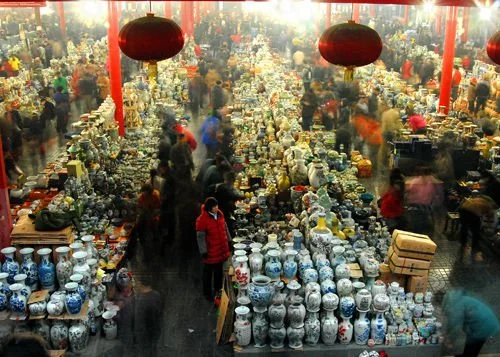
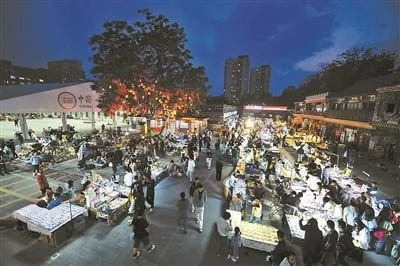
Located in Beijing's Chaoyang District, near the southeastern section of the city's Third Ring Road, Panjiayuan Antique Market has become one of China's best-known destinations for antiques, folk art, handicrafts, and collectibles.
Its development reflects a changing chapter in modern Chinese commercial and cultural life. What began as informal trading among small vendors grew into a substantial marketplace during the early 1990s. In 1995, Panjiayuan developed into an established market at its present location.
Over the years, it has evolved from a gathering place for secondhand goods into a major destination for collectors and dealers from across China and beyond.
Today, the market brings together thousands of vendors and a remarkable variety of objects. Its atmosphere is part of its appeal: the movement of people between stalls, the conversations between buyers and sellers, and the unexpected discoveries waiting around every corner.
A World of Objects Under One Roof
One of Panjiayuan's defining characteristics is its diversity.
Unlike specialized galleries or narrowly focused antique shops, the market brings together many different collecting traditions in one place.
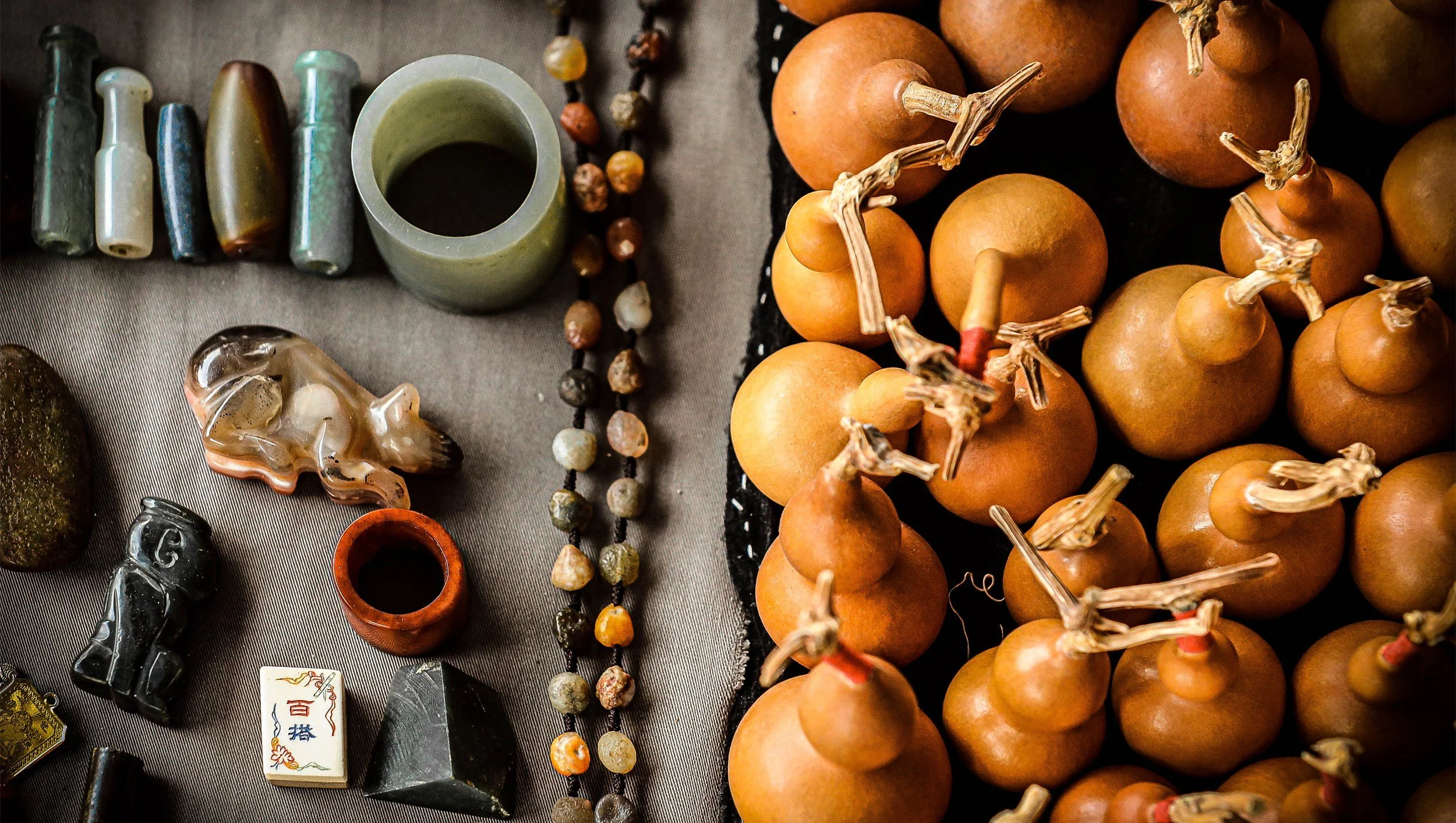
Visitors may encounter traditional Chinese calligraphy and paintings, ceramics, porcelain, antique-style furniture, old books, coins, jade, agate, wood carvings, bamboo objects, and traditional handicrafts.
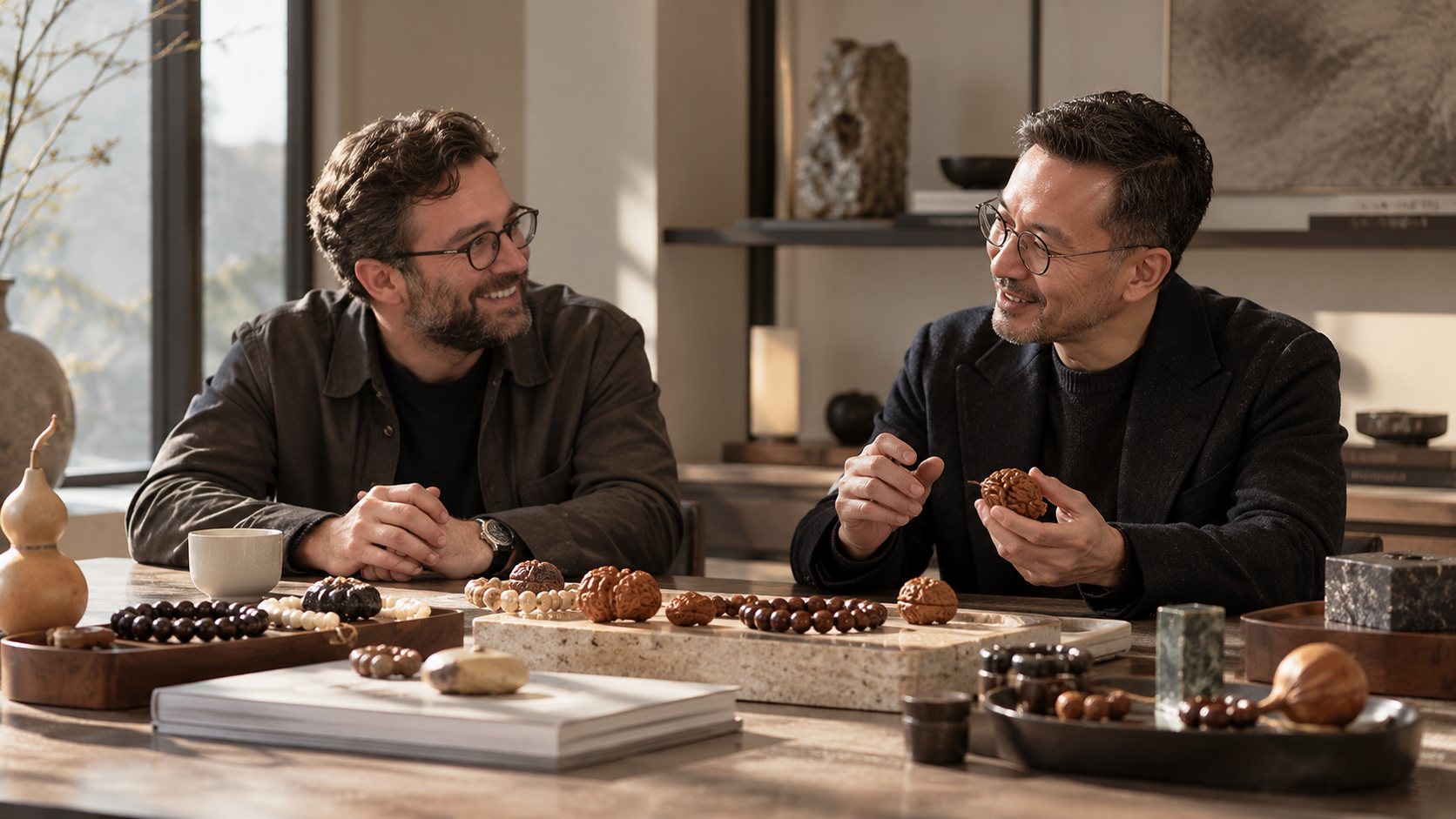
For those interested in wenwan (文玩), the world of Chinese cultural collectibles, Panjiayuan offers an especially fascinating experience.
Among its many stalls are objects associated with traditional collecting practices, including Buddhist prayer beads, bodhi seeds, carved nuts, collectible walnuts, jade ornaments, and various forms of natural materials valued for their texture, shape, craftsmanship, and character.
Some objects are appreciated for their artistic qualities. Others are collected for their material, rarity, regional origins, or cultural associations.
The market is not simply a place where objects are bought and sold. It is where different collecting interests intersect.
The Culture of Wenwan: Beyond the Objects
To understand Panjiayuan, it helps to understand the concept of wenwan.
The term refers broadly to traditional Chinese cultural collectibles, particularly objects valued for their artistic, aesthetic, historical, or personal significance.
Unlike conventional consumer goods, many wenwan objects are appreciated through prolonged interaction. A piece of wood may become more attractive through years of handling. A pair of walnuts may be selected for their symmetry, texture, and natural form. A string of beads may carry significance through its material, craftsmanship, or cultural associations.
For many collectors, the pleasure lies not only in ownership, but also in observation, knowledge, and the relationship that develops between a person and an object.
This is particularly evident in the collecting of hand-held objects such as walnuts, bodhi seeds, and prayer beads. Their surfaces, proportions, and tactile qualities invite close attention.
Panjiayuan offers a glimpse into this distinctive relationship between collecting and everyday life.
A Meeting Place for Regional Craftsmanship
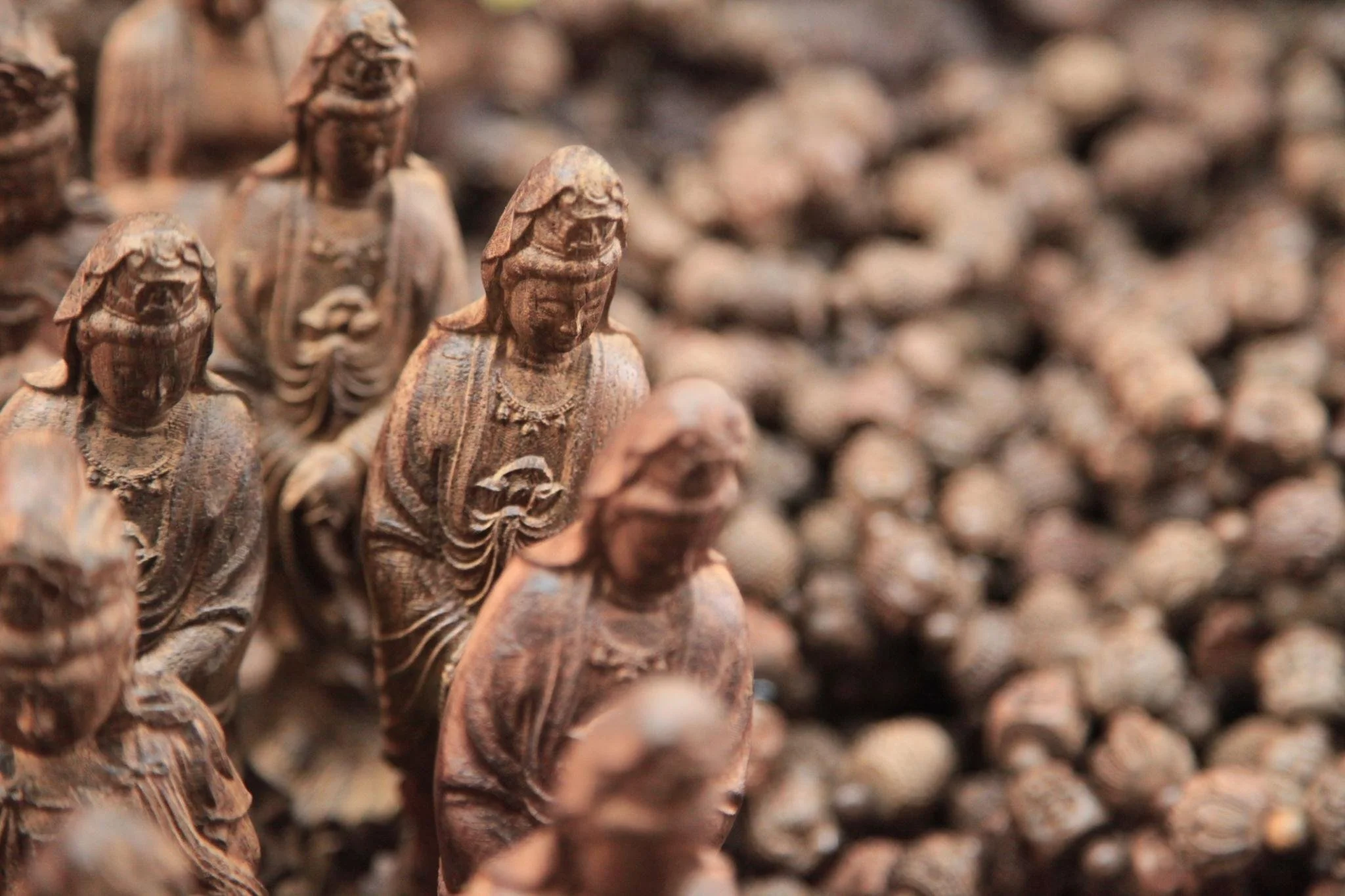
Another reason Panjiayuan is so interesting is the geographical diversity represented in its merchandise.
China's regional traditions have produced an extraordinary range of materials, techniques, and artistic styles. Wood carving, stone carving, jade craftsmanship, ceramics, metalwork, textiles, and traditional decorative arts each have their own histories and regional characteristics.
At Panjiayuan, objects from different parts of the country appear alongside one another.
A visitor might encounter a carved wooden object from one region, a piece of Tibetan-inspired metalwork, a traditional ceramic vessel, and a collection of natural stones within the same afternoon.
For an international visitor, this creates an opportunity to discover the breadth of Chinese material culture in a single setting.
For experienced collectors, it offers something different: the chance to compare examples, exchange knowledge, meet specialist dealers, and discover objects that might otherwise be difficult to find.
The Art of Looking and Learning
Panjiayuan can be exciting, but it can also be overwhelming.
With so many vendors and such a wide range of merchandise, knowing what to look for requires patience and experience.
Not every object presented as old is genuinely antique, and not every collectible has the historical or material value its seller might suggest. Reproductions, contemporary handicrafts, and antique-style objects are all part of the market.
For newcomers, the best approach is to explore with curiosity rather than the expectation of finding an extraordinary bargain.
Take time to examine the details. Compare similar objects from different vendors. Ask questions about materials, techniques, and origins. Learn how experienced collectors evaluate quality and condition.
Most importantly, understand that an object's appearance alone cannot establish its age, authenticity, or value.
The ability to distinguish between an ordinary object and an exceptional one is often developed through years of looking, handling, researching, and learning.
In this sense, Panjiayuan is not only a place to shop. It is also a place to develop a collector's eye.
Why Panjiayuan Still Matters
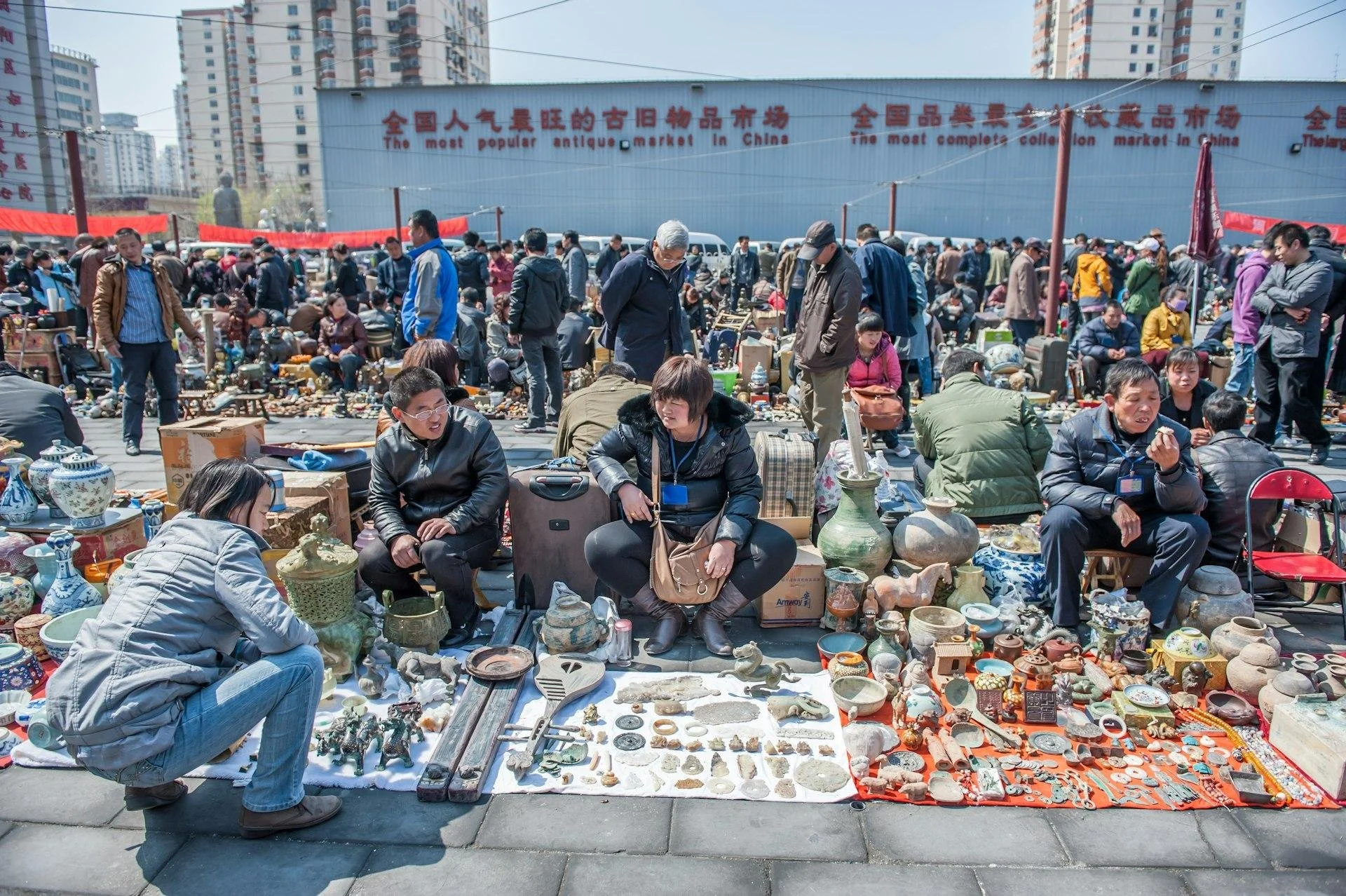
As collecting increasingly moves into online marketplaces and digital communities, physical markets such as Panjiayuan continue to offer something that cannot be fully replicated on a screen.
Objects can be examined from every angle. Materials can be touched. Craftsmanship can be observed up close. Conversations happen naturally between collectors, dealers, and enthusiasts.
These encounters are an important part of how collecting knowledge is shared and how traditional markets remain connected to contemporary life.
Panjiayuan represents a living intersection of commerce, craftsmanship, cultural memory, and personal passion.
It is not a museum, nor is it a perfectly curated gallery. Its character comes from its diversity, its unpredictability, and the people who bring it to life.
For anyone interested in Chinese collectibles, a visit to Panjiayuan offers more than the possibility of finding something interesting. It offers a window into a collecting culture that continues to evolve.
At Panjiayuan, every stall tells a different story. The real pleasure is learning how to look.
PJYLive explores Chinese collectibles, craftsmanship, and the people and traditions behind them. We believe collecting is more than acquisition — it is a practice of curiosity, knowledge, and appreciation.
PJYLive — Collecting, considered more deeply.